
Unlocking Your Potential: Jason's Guide to Ankle Inversion Sprain
Understanding Ankle Inversion Sprain
Have you been struggling with pain, limited movement, or discomfort in your outer part of the ankle after a slip or fall? You may be experiencing a condition known as Ankle Inversion Sprain. While it can be frustrating, understanding what's happening in your body is the first step toward recovery.
Picture this: you're out for a casual jog on a uneven path, or maybe just stepping off a curb wrong, and suddenly your ankle twists inward. That's a classic ankle inversion sprain—the most common type of ankle injury, where the foot rolls inward and overstretches or tears the ligaments on the outer side of your ankle. These ligaments act like sturdy ropes keeping your joint stable, but when they're damaged, it can feel like your ankle's betrayed you.
People with ankle inversion sprain immediate have pain along the outer ankle, swelling and bruising that spreads not just the ankle but also on the feet. The symptoms worsen when you even think about putting weight on it such as walking. The symptoms may get better by itself but what is left if there usually blocking sensation when you try to (dorsiflexion of ankle) lift your toe up, you may even feel increase in swaying when standing on the affected feet. If left unchecked, it can lead to chronic instability, making you second-guess every move and sidelining your active lifestyle.
The Role of Physiotherapy in Treatment
Many people wonder if physiotherapy can truly help with ankle inversion sprain. The short answer is, absolutely! Our goal isn't just to treat the symptoms but to address the root cause. A physiotherapist can help by:
Accurate Diagnosis: Performing a thorough assessment, including hands-on tests and functional movement checks, to pinpoint the exact grade of sprain and rule out fractures or other issues.
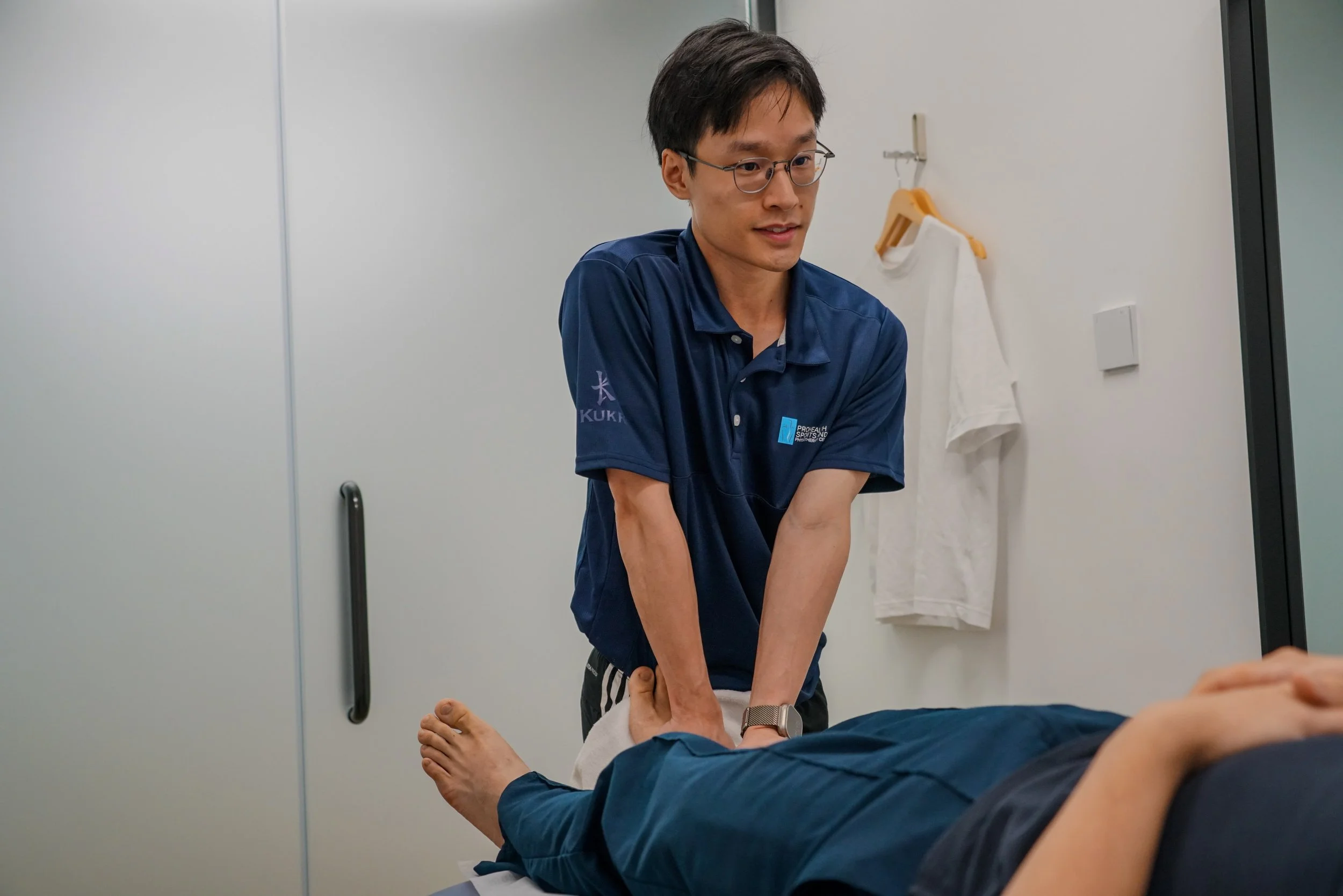
Pain Management: Using techniques like manual therapy to ease joint stiffness, ice therapy, or dry needling to reduce your discomfort.
Improving Mobility: Prescribing targeted exercises, such as gentle ankle circles or calf stretches, to restore range of motion and flexibility without aggravating the injury.
Building Strength: Developing a personalized strengthening program, balance drills, and proprioception training to support the ligaments to prevent re-sprain.
Patient Education: Providing you with the knowledge and tools to manage your recovery and maintain a healthy, active lifestyle long-term.
A Patient's Journey: JK's Story
To show you what this looks like in practice, I want to share the story of one of my patients.
The Initial Challenge
My Patient came to see me with severe pain in the outer part of his right ankle during a football game. He was struggling with walking, require the use of crutch, swelling and tenderness on the outer part of right ankle. This was preventing him from playing football normally.
Our Collaborative Treatment Plan
We started with a comprehensive assessment to understand his specific needs. Our plan included:
Phase 1: Pain Reduction. We focused on calming the painful area and control swelling with therapeutic ultrasound, ice therapy, soft tissue release, compression sleeve
Phase 2: Restoring Movement. Once the pain was more manageable, we introduced a series of exercises to regain their range of motion, like ankle alphabet and passive ankle joint mobilization
Phase 3: Strengthening and Prevention. To build resilience and prevent a recurrence, we progressed to strengthening exercises, such as standing calf raise, squatting with external resistance at right lower leg, and gradually progress to polymetric training such as hopping exercise
The Outcome
After 3 weeks of consistent work, JK made incredible progress. He is now able to run like before, able to get back to football game playing as a goalie. His story is a powerful reminder that with the right guidance and a little dedication, recovery is within reach.
Ready to Start Your Journey? Book A Session With Jason Today!
If you're dealing with a Ankle Inversion Sprain, don't wait for the pain to go away on its own. Reaching out to a physiotherapist can be the turning point in your recovery. We're here to help you get back to doing the things you love, without being held back by pain.