
Jump high seems fun until.. You start feeling pain at the front of your knee
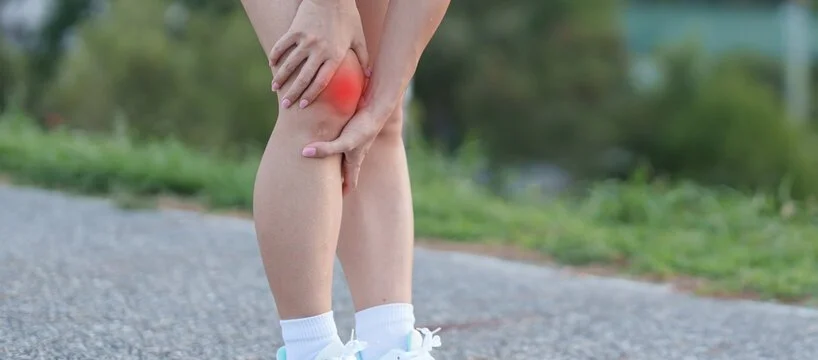
If you have a sharp, aching pain just below your kneecap especially when you jump, after a run, or a game of basketball, you might be dealing with Jumper's Knee, medically termed Patellar Tendinopathy.
What Exactly is Jumper’s Knee?
Your patellar tendon plays a crucial role in how you move. It connects with the muscles in the front of your thigh to move your knee so you can kick, run, and jump.
When you repeatedly put intense stress on this tendon, like jumping or changing directions quickly, you can overload and accumulate microtears to the tendon. Over time, the tendon fibre becomes disorganised and weakened, leading to patellar tendinopathy.
Common Triggers
● Repetitive jumping (basketball, volleyball, track and field)
● Sudden increases in training intensity or frequency
● Tight thigh muscles, pulling on the tendon
How to Spot the Symptoms
Jumper’s knee usually starts as a mild ache and gradually worsens if left untreated. Keep an eye out for these key warning signs:
● Localized pain: A dull or sharp pain directly below your kneecap, especially when you push on it.
● Pain Proportional to Load: Pain increases with more demanding activities, eg. jumping, squatting, lunging, or running
● The Warm-Up Effect: Tendons often feel stiff or painful when starting to move, tend to ease up ("warm up") slightly during activity.
4 Steps to Heal Jumper's Knee
Ignoring the pain and "pushing through" will only convert a temporary issue into a chronic, long-term problem. Instead, use these strategies to jumpstart your recovery:
1. Load management
Rest is bad for tendons, and complete rest is never a long term fix. Tendons need load to maintain structure. (Cook et al., 2016)
Use a simple 0–10 pain scale to monitor your activities:
Safe Zone: (0-3) Mild discomfort or a dull ache that disappears shortly after you stop moving is generally acceptable.
Danger Zone: (4+) Sharp, stabbing pain, or any pain that causes you to limp, means the current load is too high.
2. Graded Exercise Therapy:
Recovery relies on a structured, progressive loading pathway:
Phase 1: Isometrics
Static hold exercises for 45 sec, 4-5 sets, (such as Spanish Squat) designed to take away your pain and activate quad muscles. Research has shown this exercise can relieve pain lasting up to 45 mins. (Rio et al., 2015)
Phase 2: Heavy Slow Resistance
Controlled heavy slow-tempo squats or split squats to rebuild tendon strength.
Phase 3: Energy Storage & Plyometrics:
A gradual, late-stage return to jumping and explosive movements.
3. Kinetic Chain Assessment:
Physiotherapist also evaluate surrounding hip, glute, calf, and ankle strength, as deficits downstream or upstream can overload the patellar tendon.
4. Use Supportive Gear / Sports Taping
An over-the-counter patellar tendon strap (a thin strap worn just below the kneecap), or sports taping from our physiotherapists can help distribute pressure away from the injured tendon, providing pain relief during daily activities.
Ready to Start Your Journey? Book A Physiotherapy Session With Marco Today!
Reaching out to a physiotherapist can be the turning point in your recovery. We're here to help you get back to doing the things you love, without being held back by pain.