
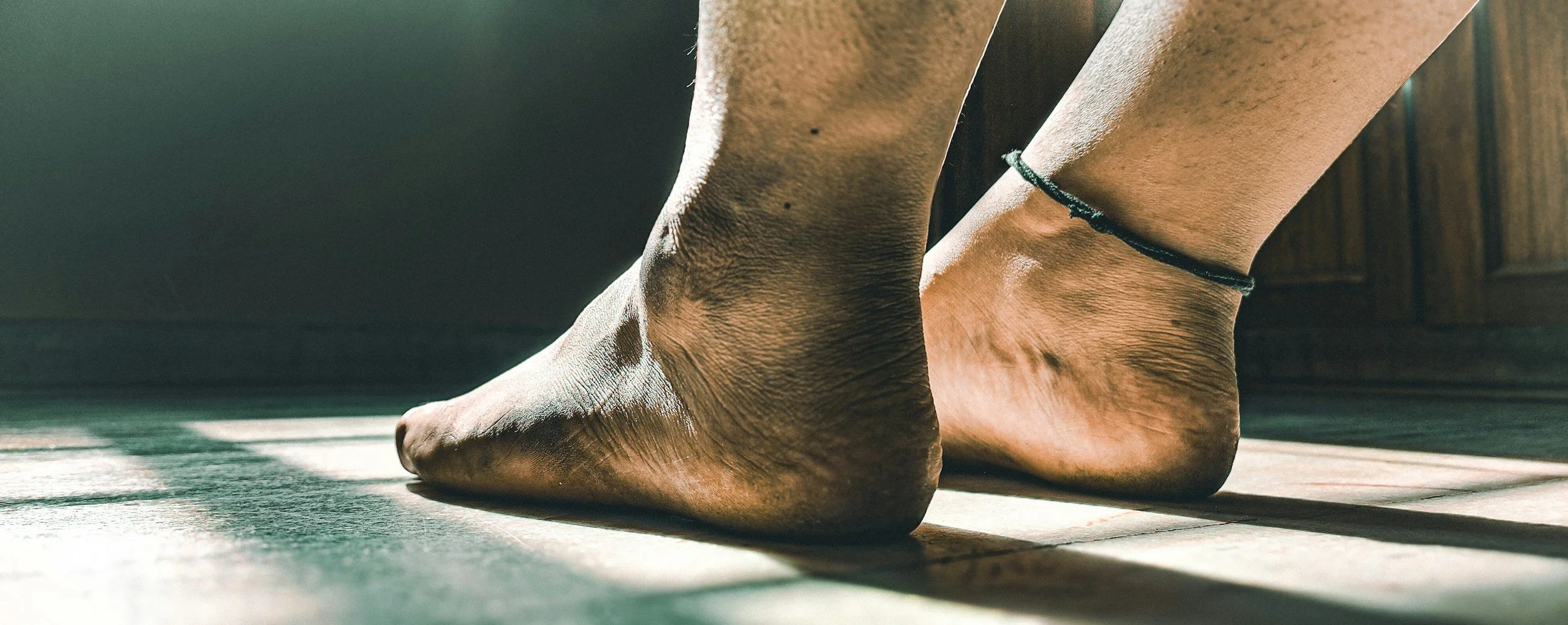
Whether you are training for a Marathon, competing in HYROX, or playing weekend padel, an irritated Achilles can quickly sideline your routine. Here is the clinical reason why resting too long backfires, how to spot early tendon overload, and the evidence-based physiotherapy roadmap to lasting recovery.
What Is Achilles Tendinopathy?
Achilles tendinopathy is an overuse injury characterised by pain, morning stiffness, and reduced load capacity in the thick tendon connecting your calf muscles to your heel bone.
Unlike acute muscle tears, most chronic Achilles pain involves a failed healing response and structural changes in the tendon fibres rather than simple inflammation, which is why anti-inflammatory medication and passive rest alone often fall short.
Why Does Complete Rest Make Achilles Pain Worse?
Tendons behave very differently from muscles. Muscles have a dense blood supply and recover rapidly with rest. Tendons have a lower blood supply and rely on mechanotransduction, the process where physical tension signals cells to produce healthy collagen (Cook et al., 2016)
When you stop loading your Achilles completely:
Tendon stiffness drops: The tendon loses its ability to store and release elastic energy like a spring.
Calf strength declines: Weakened gastrocnemius and soleus muscles force the Achilles to absorb more shock when you resume training.
The boom-and-bust cycle begins: Pain disappears while resting on the couch, only to flare right back up during your first run back.
How to Tell If You Have Achilles Tendinopathy: 3 Early Signs
Catching tendon overload in its reactive phase makes recovery significantly faster. Common clinical signs include:
Morning stiffness: Your ankle feels tight, tender, or stiff during your first 10 to 15 steps out of bed before gradually warming up.
The "warm-up" phenomenon: A dull ache appears at the start of exercise, fades once you get moving, and returns worse the following morning.
Localised tendon tenderness: Pinching the Achilles tendon 2 to 6 centimetres above the heel bone (mid-portion) or right at the heel bone (insertional) feels noticeably sore or thickened.
Complete Rest vs. Progressive Loading: Which Works Better?
| Recovery Approach | Effect on Tendon Tissue | Effect on Calf Strength | Long-Term Outcome |
|---|---|---|---|
| Complete Rest (2+ Weeks) | Reduces tendon stiffness and shock absorption | Causes rapid muscle atrophy and weakness | High risk of immediate flare-up upon return to sport |
| Progressive Loading (Physiotherapy) | Stimulates collagen remodeling and resilience | Builds gastrocnemius and soleus capacity | Restores pain-free running, jumping, and sport performance |
The 3-Phase Physiotherapy Plan to Heal Achilles Pain
Evidence-based sports physiotherapy heals Achilles tendinopathy by gradually rebuilding the tendon's tolerance to stress without pushing it past its recovery threshold.
Phase 1: Calm the Pain (Isometric Holds)
Isometric calf exercises reduce tendon pain and maintain muscle activation without placing high strain on irritated tissue. (Rio et al., 2015)
Holding a double-leg or single-leg calf raise at the top position for 30 to 45 seconds (repeated 4 to 5 times) acts as a natural analgesic while keeping the nervous system engaged.
Phase 2: Build Tendon Capacity (Heavy Slow Resistance)
Once daily pain settles, slow, weighted heel raises stimulate structural tendon remodelling. Because the Achilles connects to two distinct calf muscles, effective rehab targets both:
Straight-knee heel raises to strengthen the upper calf (gastrocnemius).
Bent-knee heel raises to target the deeper, endurance-focused calf muscle (soleus), which absorbs massive force during running.
Phase 3: Restore Springiness (Plyometrics & Return to Sport)
Before returning to sprinting, trail running, or court sports, the Achilles must retrain its stretch-shortening cycle. Controlled plyometrics, such as pogo hops, skipping, and single-leg bounding, prepare the tendon to handle fast, high-impact forces safely.
3 Common Mistakes That Delay Achilles Recovery
Aggressive calf stretching: Pulling your toes toward your shin compresses the Achilles against the heel bone, which often aggravates insertional tendon pain.
Training through sharp pain: A mild discomfort (2 to 3 out of 10) during rehab exercises is acceptable if it settles within 24 hours. Sharp pain or worsening morning stiffness means the load is too high.
Ignoring the kinetic chain: Restricted ankle mobility, weak glutes, or poor foot control force the Achilles to overwork with every stride.
Frequently Asked Questions About Achilles Tendon Pain
How long does Achilles tendinopathy take to heal?
Mild reactive Achilles pain can improve within 2 to 4 weeks of proper load management. More chronic, long-standing tendinopathy typically requires 8 to 12 weeks of consistent progressive strengthening to remodel tendon tissue fully.
Can I still run with Achilles tendon pain?
You can often continue running at a modified volume if your pain stays at or below a 3 out of 10 during the run and does not worsen the next morning. A sports physiotherapist can help adjust your mileage, cadence, and footwear so you stay active safely.
Does shockwave therapy work for Achilles tendinitis?
Extracorporeal Shockwave Therapy (ESWT) is clinically proven to stimulate blood flow, reduce pain sensitivity, and accelerate healing in stubborn chronic Achilles tendinopathy, especially when combined with a structured calf-strengthening program.
Get a Personalised Achilles Recovery Plan
Every Achilles injury behaves differently depending on whether the pain sits in the mid-portion of the tendon or right at the heel bone. At Prohealth, our sports physiotherapists combine objective strength testing, movement analysis, and targeted treatments, including progressive loading programs, shockwave therapy, and dry needling, to address the root cause of your overload.
Ready to Start Your Journey? Book A Physiotherapy Session With Marco Today!
Reaching out to a physiotherapist can be the turning point in your recovery. We're here to help you get back to doing the things you love, without being held back by pain.