
Beyond the Growing Pains: A Physiotherapist’s Guide to Scoliosis in Adolescence and Menopause
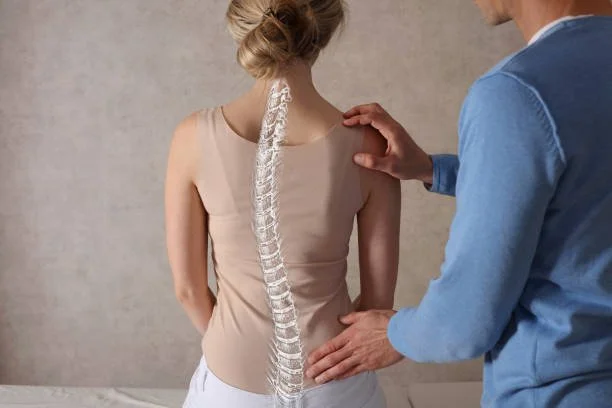
As physiotherapists, our clinical focus often shifts depending on the decade of the patient sitting in front of us. However, when it comes to scoliosis, we see two distinct epidemiological peaks across a woman's lifespan: adolescence and menopause. While the clinical presentations look vastly different—one driven by rapid skeletal growth, the other by asymmetric structural and joint degradation—both require timely, evidence-based, scoliosis-specific physical therapy interventions to alter the natural history of the condition.
The Adolescent Peak: Changing the Trajectory of AIS
Adolescent Idiopathic Scoliosis (AIS) affects roughly 2% to 4% of children aged 10 to 18. While mild curves present symmetrically between sexes, females are up to ten times more likely than males to experience significant curve progression exceeding 30° (Weinstein et al., 2008).
The primary clinical driver is the pubertal growth spurt. Rapid skeletal elongation combined with asymmetric mechanical loading creates a vicious cycle of asymmetrical vertebral growth (The Hueter-Volkmann Principle).
The Evidence for Scoliosis-Specific Interventions
Historically, a "watch and wait" approach was standard for mild curves (under 25°). Today, high-quality international consensus supports early, proactive intervention using Physiotherapy Scoliosis-Specific Exercises (PSSE) like the Schroth Method, as outlined by the SOSORT guidelines.
The landmark BrAIST trial (Weinstein et al., 2013) definitively established that conservative management significantly reduces the rate of curve progression to the surgical threshold. Supplementing this, a randomized controlled trial by Schreiber et al. (2016) demonstrated that adding Schroth-specific exercises to standard care significantly improves radiographic Cobb angles, trunk rotation, and overall quality of life compared to standard care alone.
By teaching adolescents three-dimensional self-correction, rotational breathing, and asymmetric muscular activation, we can actively de-rotate the spinal segments and stabilize the curve before skeletal maturity.
The Menopause Peak: Managing Degenerative (De Novo) Curves
On the other end of the lifespan sits a vastly under-screened population. Epidemiological data indicates that the prevalence of adult scoliosis increases exponentially with age, affecting 12% to 30% of postmenopausal women, with some cohorts over age 60 demonstrating prevalence rates up to 60% (Schwab et al., 2005).
In this demographic, we primarily treat Adult De Novo (Degenerative) Scoliosis—a curve originating entirely in adulthood due to asymmetric structural failure, rather than the progression of an adolescent curve.
The precipitating factor is the abrupt drop in estrogen during menopause, which accelerates degenerative disc disease and facet joint arthropathy. As the intervertebral discs thin unevenly, the lumbar spine loses asymmetric structural integrity, resulting in asymmetrical collapse, lateral listhesis, and rotatory subluxation.
The Evidence for Adult Scoliosis Rehabilitation
Unlike adolescents, these patients present with significant mechanical low back pain and radiculopathy due to neurogenic claudication or spinal stenosis (*Silva & Lenke, 2010*).
Our clinical objective shifts from stopping growth-related curvature to improving dynamic segment stability, correcting sagittal and frontal spinal balance, and reducing asymmetrical joint loading.
Clinical evidence suggests that adult scoliosis patients benefit significantly from task-specific PSSE adapted for the degenerative spine. A study by Monticone et al. (2014) demonstrated that a program combining cognitive-behavioral approach with specialized scoliosis exercises significantly reduced pain, improved posture, and enhanced quality of life in adults with degenerative scoliosis compared to general physiotherapy exercises.
By utilizing three-dimensional postural re-education tailored to the stiffer adult spine, we reinforce the deep stabilizers of the spine. This specific muscular recruitment reduces asymmetric compressive forces on the facet joints, stabilizes lateral listhesis, and helps preserve functional independence and reduce pain.
Clinical Takeaway
Scoliosis is not a static condition, nor is it exclusive to youth. Whether treating a 13-year-old navigating an accelerated growth spurt or a 55-year-old postmenopausal female experiencing asymmetrical spinal decay, our role remains the same: identify the mechanical and hormonal drivers early, and deploy targeted, scoliosis-specific exercise therapy to change the structural path of the spine.
Ready to Start Your Journey? Book A Physiotherapy Session with Yolanda Today!
Reaching out to a physiotherapist can be the turning point in your recovery. We're here to help you get back to doing the things you love, without being held back by pain.