
How Dry Needling and Shockwave Therapy Accelerate Muscle Recovery: What the Science Says
We’ve all been there. You finish an intense workout, crush a personal record, and feel like an absolute champion…until 48 hours later when going down a flight of stairs feels like the hardest thing in the world. When muscle soreness strikes, the standard advice is always the same: roll out on a foam roller, increase your protein intake, and wait it out. But when you are training for a specific goal, managing chronic tightness, or trying to bounce back from an injury, "waiting it out" is not what you want to hear.
If you've been looking for faster, more effective ways to get back to 100%, then you should turn to Dry Needling and Shockwave Therapy.
1. Dry Needling: Deactivating the Cellular "Knot"
To understand dry needling, we first have to understand what a muscle "knot" actually is. In sports medicine, these are known as myofascial trigger points, which are hyper-irritable spots within a taut band of skeletal muscle.
When a muscle is overworked, the microscopic pumps that regulate calcium flow break down, causing the muscle fibers to lock into a state of continuous contraction. This localized spasm compresses nearby blood vessels, cutting off oxygen and trapping acidic waste products. This is why the knot throbs and feels highly sensitive.
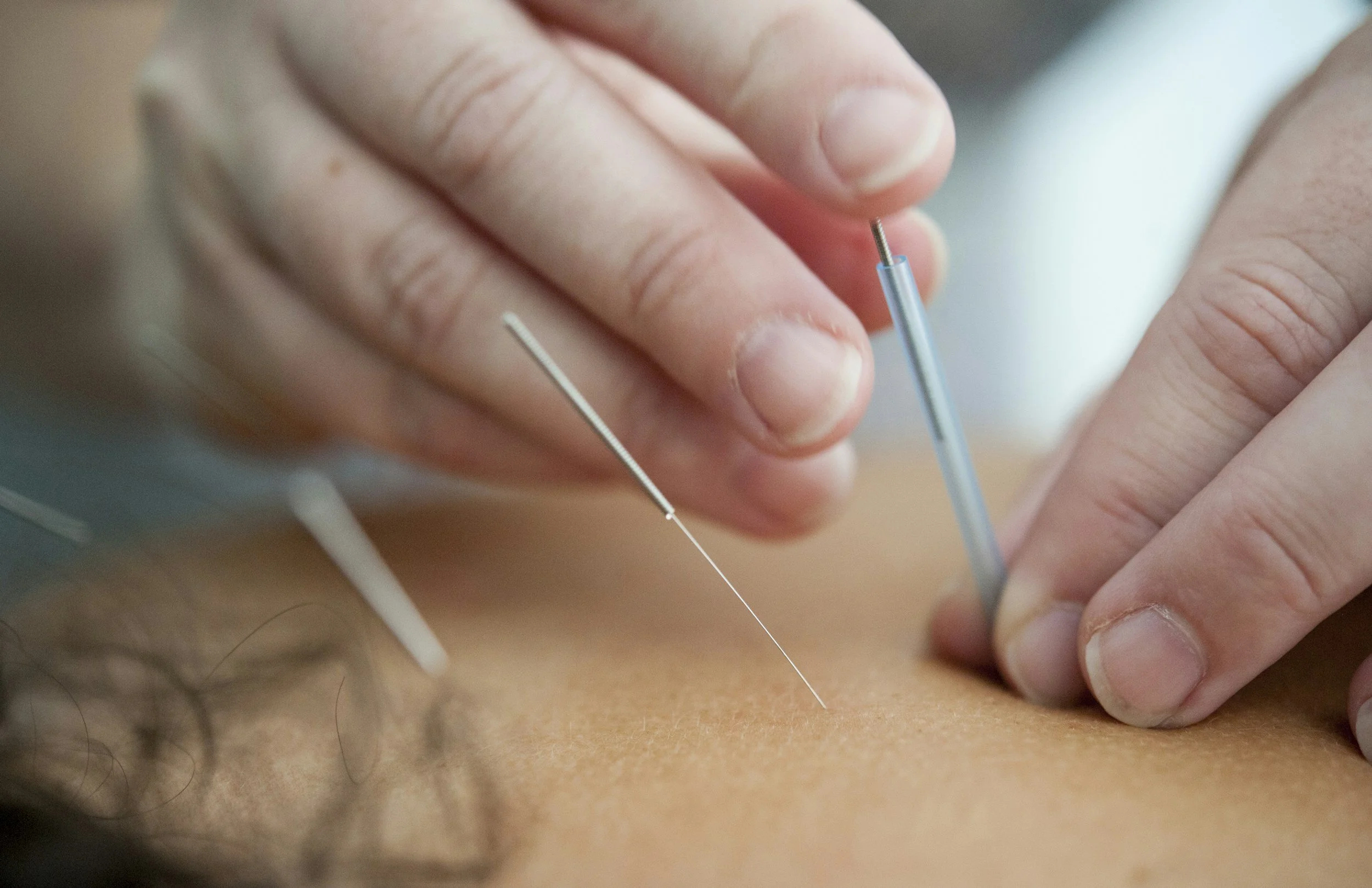
Dry needling involves inserting a sterile, thin filiform needle directly into these trigger points.
What the Science Says:
The Reset Button: Research shows that when the needle hits the trigger point, it elicits a Local Twitch Response (LTR) which is an involuntary contraction and relaxation of the muscle fiber. This twitch mechanically breaks the dysfunctional bond holding the muscle tight, essentially forcing the muscle fiber to reset to its optimal, resting length.
The Chemical Flush: Studies utilizing microdialysis have found that immediately following an LTR, the concentration of inflammatory chemicals and pain-mediating compounds (like Substance P) in the muscle tissue drops significantly.
Restoring the Energy Supply: By relaxing the tight band of muscle, dry needling immediately restores healthy blood flow (capillary perfusion), delivering fresh oxygen and nutrients to the damaged tissue to speed up cellular repair.
2. Shockwave Therapy: Jumpstarting the Healing Cascade
While dry needling works by physically releasing tension, Extracorporeal Shockwave Therapy (ESWT) takes an entirely different approach. It uses high-energy acoustic (sound) waves applied to the skin’s surface to penetrate deep into damaged or chronically tight tissues.
Think of shockwave therapy as controlled micro-trauma. The acoustic waves deliver mechanical stress to the target area, which sounds counterintuitive for recovery, but it is exactly what a stalled healing process needs.
What the Science Says:
Angiogenesis (New Blood Vessels): One of the primary scientific benefits of ESWT is its ability to stimulate neovascularization. This is the growth of new micro-blood vessels. The acoustic waves cause microscopic stress in the tissue, triggering the body to release growth factors like VEGF (Vascular Endothelial Growth Factor). More blood vessels mean a permanent upgrade to the muscle's nutrient and oxygen supply lines.
Breaking Up Calcifications: In cases of chronic overuse or poorly healed injuries, repetitive stress can cause painful calcium deposits to form within muscles and tendons. Scientific imaging confirms that shockwave therapy physically disrupts and breaks down these calcifications, allowing the lymphatic system to clear them out.
Collagen Synthesis: For muscle fibers and tendons to recover their elasticity and strength, they need collagen. Clinical studies show that ESWT stimulates the production of pro-collagen, turning the gears of structural tissue remodeling back on.
Dry Needling vs. Shockwave Therapy: Which is Best For You?
Because these therapies attack recovery from two different angles, they are frequently paired together by clinicians. However, depending on what your body is dealing with, one may take priority:
-
Best For: Acute muscle tightness, deep knots, radiating pain, and movement restrictions.
Sensation: A deep, dull ache or quick "twitch" sensation.
Primary Mechanism: Mechanical release of localized muscle knots (Trigger Points).
-
Best For: Chronic tendon issues (e.g., Achilles tendonitis, tennis elbow), plantar fasciitis, and stubborn scar tissue.
Sensation: A rhythmic, tapping pressure that can feel tender but is highly adjustable.
Primary Mechanism: Acoustic wave stimulation of cellular regeneration.
The Takeaway
True muscle recovery isn't just about resting; it's about optimizing the environment inside your tissue so it can rebuild stronger.
While a foam roller can offer temporary relief by massaging the surface, dry needling and shockwave therapy work at a deeper biological level—physically resetting locked muscle fibers and biochemically signaling the body to accelerate cellular repair. If you are tired of playing the waiting game with your recovery, it might be time to put down the roller and talk to a physical therapist about the science of advanced recovery