
Is Your Desk Job Causing Lower Back Pain?
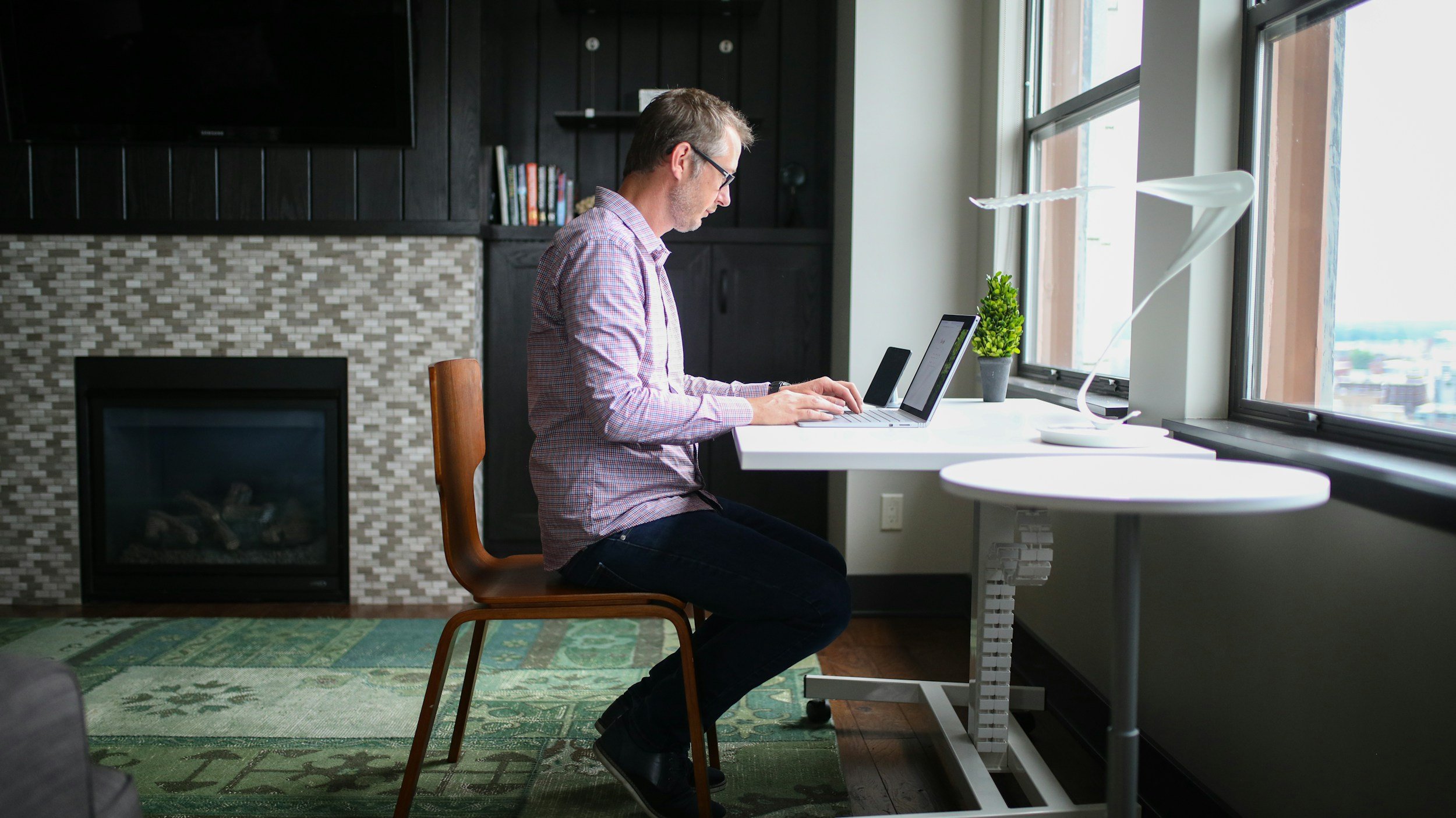
Do you start your workday feeling energized, only to find yourself by noon slouching in your chair while having a throbbing ache in your lower back? You’ve probably tried the classic remedies such as buying an expensive ergonomic chair, propping up a lumbar pillow, or forcing yourself to "sit up straight" for a grand total of ten minutes before slouching again. You end up frustrated, feeling like a simple eight-hour workday is actively wrecking your body.
But what if the chair isn't the only enemy? Before you give yourself up to chronic stiffness or go with the classic excuse of "just getting older," it’s time to look at the mechanics of how you sit. The hidden culprit behind your lower back pain isn't just the act of sitting, but how desk work completely deactivates your core support systems.
In physiotherapy and biomechanics, we view the body as an integrated machine. When you sit for prolonged periods, you aren't just resting. You are actively training certain muscles to turn off and others to overwork. From tech executives to remote workers, understanding the "sitting anatomy" is your first line of defense against chronic back pain.
An Analytical Look at Your Seated Foundation
When you are standing, your feet and legs support your weight. But the moment you sit down, your pelvis becomes the new foundation of your spine. To sit without pain, your body relies on a neutral pelvic position supported by a balance between your hip flexors, glutes, and core.
Ideally, your weight should rest directly on your "sit bones" (the ischial tuberosities). In this position, the natural S-curve of your spine is preserved, and your muscles have to do very little work to keep you upright.
However, modern desk work disrupts this balance in two distinct ways:
The Posterior Slump: As fatigue sets in, you slide forward in your chair, rolling backward off your sit bones. This tucks your tailbone under, flattening the natural curve of your lower back and overstretching the spinal ligaments.
The Anterior Arch: Alternatively, if you try to force an overly upright posture, you might tilt your pelvis too far forward. This pinches the facet joints of the lower spine and forces the lower back muscles into a state of constant, exhausting contraction.
The Kinetic Chain: How Sitting Shuts Down Your Body
In biomechanics, no muscle group works in isolation. When you anchor your pelvis into an office chair for hours at a time, it triggers a predictable, upward-traveling ripple effect known as Lower Crossed Syndrome.
1. The Hip and Glute Disconnect
When you sit, your hips are bent at a 90-degree angle. Over time, the muscles at the front of your hips (the iliopsoas) become chronically shortened and tight. Simultaneously, your glute muscles (the buttocks) are completely relaxed. Because they are being sat on, the brain essentially turns them off, a phenomenon known as "glute amnesia” or also dead butt syndrome.
2. The Lower Back Tug-of-War
When you finally stand up after hours of sitting, those shortened hip flexors don't magically lengthen. Instead, they pull forward on your pelvis and your lumbar spine. Because your glutes are "asleep" and unable to pull the pelvis back into place, your lower back muscles are forced to contract with massive force just to keep you upright.
3. The Diaphragm and Core Collapse
A slumped seated posture compresses your abdominal cavity. This makes shallow "chest breathing" the default, which deactivates your diaphragm and your deep core muscles (the transversus abdominis). Without internal support from your core, your lower back is left completely unprotected against the forces of gravity.
Restoring Your Spine: A Simple Office Routine
You don't need to quit your job to fix your back. By integrating simple, intentional movements into your workday, you can wake up dormant muscles and relieve the mechanical pressure on your lower spine.
The 30-Minute Reset: Set a timer. Every 30 minutes, stand up for just 60 seconds. Squeeze your glutes tightly for 10 seconds to "re-wake" the connection between your brain and your hips.
The Seated Pelvic Tilt: Sit tall on your chair. Slowly roll your pelvis backward to slouch, then slowly roll it forward to arch your back. Find the exact middle ground where your weight feels perfectly balanced on your sit bones. Hold this neutral position for a few deep, belly breaths.
The Half-Kneeling Hip Flexor Stretch: Drop into a lunging position with one knee on the floor. Tuck your tailbone slightly under and gently shift your weight forward until you feel a deep stretch in the front of your hip. Hold for 30 seconds per side to undo the tightening effects of sitting.
By taking control of your seated mechanics, you can stop treating the symptoms of back pain and finally fix the foundation.