
Runner’s Knee (Patellofemoral Pain Syndrome): Why Rest Isn’t Enough and How to Heal
What is Patellofemoral Pain Syndrome (PFPS)?
Patellofemoral Pain Syndrome (PFPS)—commonly referred to as “Runner’s Knee”—is one of the most frequent causes of front knee pain in active/athletic individuals. It refers to irritation of the patellofemoral joint where the knee cap (patella) glides along the thigh bone (femur).
Patients typically describe a dull, aching pain behind or around the kneecap that intensifies during load-bearing activities involving a bent knee—such as running, squatting, taking the stairs (especially downhill or downstairs), or sitting for prolonged periods with bent knees. Rather than a sudden trauma, PFPS usually develops gradually over time due to repetitive overloading or compression forces applied on the joint.
Who is At Risk and What Drives It?
While runners are most frequently affected, PFPS is also common among recreational athletes such as gym-goers, hikers, ball-sports players and individuals returning to sport after a break. The primary driver of PFPS is an imbalance in how load is distributed across the knee joint. This is rarely purely just a "knee problem"—it is usually influenced by lower limb biomechanics further up and down the kinetic chain:
Reduced Hip & Glute Control: Weakness in the hip abductors and external rotators (such as the gluteus medius) causes the thigh bone to roll inward (dynamic valgus) during movement, pulling the kneecap off its ideal tracking path.
Foot and Ankle Mechanics: Excessive foot pronation (flat-foot) causes inward rotation of the shin bone (tibia), placing additional rotational stress on the kneecap.
Training Errors: A sudden spike in running volume, hill training, or jumping intensity without adequate rest periods or changes in running surface or footwear often triggers the onset of pain.
How Physiotherapist Manages Runner’s Knee
The goal of physiotherapy is not just to settle your immediate pain, but to address the root causes so you can keep moving safely. Early-stage management focuses on balancing and reducing symptom relief with targeted interventions:
Load Management: Rather than complete rest—which reduces muscle strength and capacity—we guide you through "relative rest", adjusting training volume, surface, or intensity so tissues can recover while staying active.
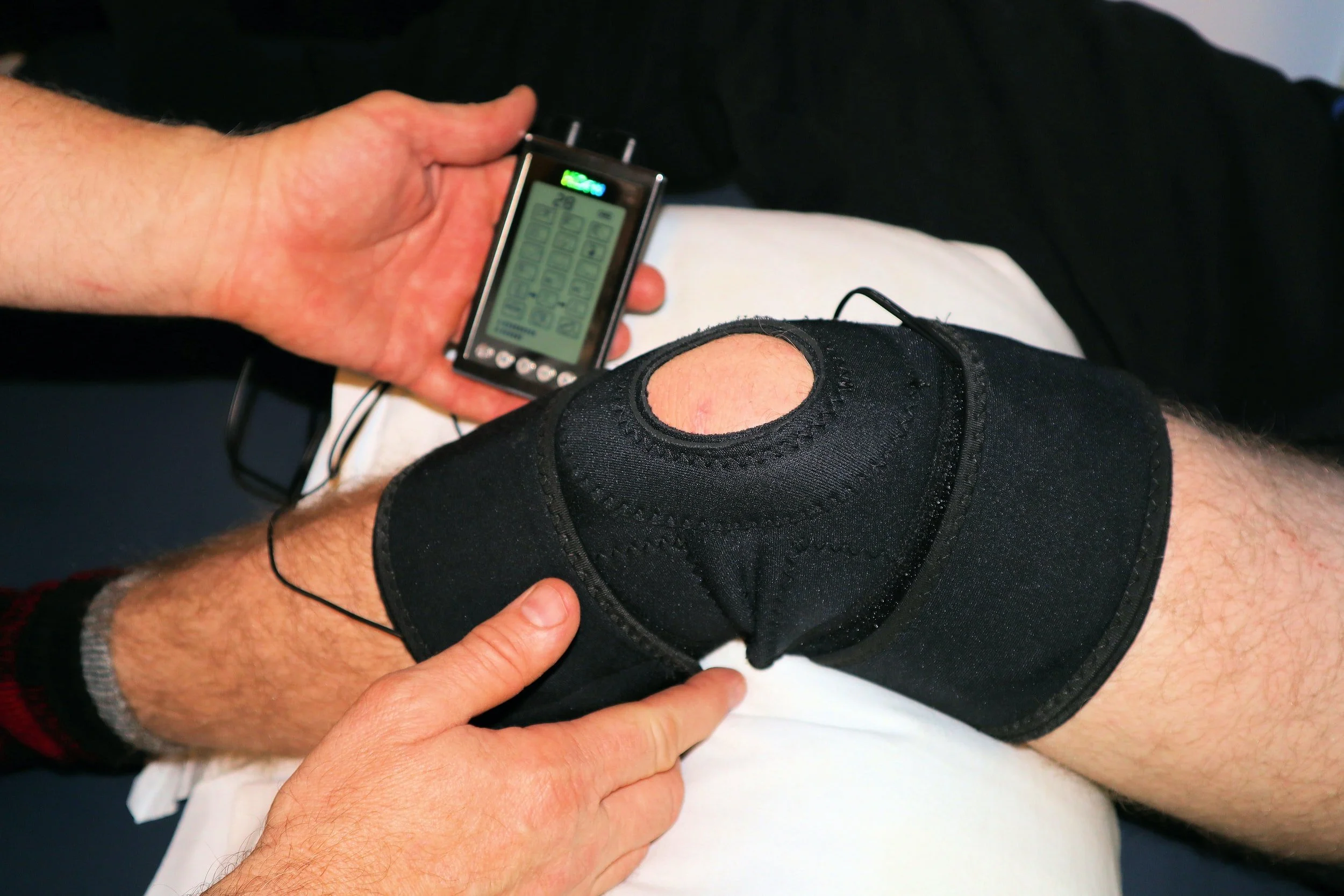
Taping Techniques: Specialized patellar taping can often immediately reduce pain during movement by offering positional support to the kneecap.
Manual Therapy: Targeted soft tissue release and joint mobilization around tight structures (such as the quadriceps, IT band, and calf) help restore optimal movement and relieve local tension and pain.
Exercise Rehabilitation: Rebuilding the Kinetic Chain
Long-term resolution of Runner’s Knee relies on progressive, targeted exercise rehabilitation designed to restore strength and control across the entire leg:
Quadriceps Strengthening: Targeted loading of the quadriceps—especially using controlled isometric and eccentric exercises—builds load tolerance in the patellofemoral joint without overloading inflamed tissue.
Knee Control via Glute Strength: Strengthening the gluteus medius and maximus prevents the knee from collapsing inward during single-leg tasks like running, stepping, or lunging.
Whole Kinetic Chain Integration: To obtain long-term improvement, rehab must involve the whole lower limb kinetic chain—strengthening the hamstrings for joint stability, building calf endurance for push-off power, and enhancing intrinsic foot/ankle control to maintain a stable foundation. Plyometric exercises will also be used to optimise overall lower limb performance.
Ready to Start Your Journey? Book A Physiotherapy Session with Frank Today!
Reaching out to a physiotherapist can be the turning point in your recovery. We're here to help you get back to doing the things you love, without being held back by pain.